
What is post renovation cleaning? It is a detailed cleaning process carried out after renovation or construction work is completed. It focuses on removing fine dust, debris, stains, and leftover construction residue from floors, windows, fixtures, kitchens, bathrooms, and other surfaces that regular house cleaning may not fully handle.
Renovation can leave behind much more than a few visible bits of dust. Fine particles can settle on floors, cabinets, walls, windows, and even areas that seem untouched. That is why post-renovation cleaning is often the final step before moving furniture back in or occupying a newly renovated space.
What Does Post Renovation Cleaning Include?
Post renovation cleaning covers the detailed cleaning needed after renovation work, including areas affected by construction dust and residue.
A typical service may include:
- Sweeping, vacuuming, and mopping floors
- Removing fine construction dust
- Cleaning windows and glass panels
- Wiping furniture, fixtures, doors, and other surfaces
- Cleaning kitchen countertops, cabinets, sinks, and stove areas
- Cleaning bathrooms, mirrors, sinks, toilets, and shower areas
- Removing leftover construction residue
- Cleaning balconies and common areas where applicable
The exact scope depends on the property and the type of renovation. A light renovation may only require dust removal and surface cleaning, while a major renovation can leave more residue behind and require considerably more work.
GT Environmental, for example, lists floor, window, bathroom, kitchen, balcony, and surface cleaning as part of its post-renovation cleaning service in Singapore.
Why Is Post Renovation Cleaning Important?
Post renovation cleaning is important because construction work can introduce fine particles, chemical residues, and other pollutants into an indoor environment. Cleaning helps remove settled dust and residue, while proper ventilation is also important for managing airborne pollutants.
Singapore’s National Environment Agency (NEA) notes that poor indoor air quality can be associated with exposure to particulate and chemical pollutants. Its current guidance also recommends ventilation and air-purging measures to help remove indoor pollutants.
There are several practical reasons to clean thoroughly after renovation:
- Renovation dust can settle almost everywhere. Fine particles can accumulate on shelves, ledges, light fixtures, floors, and other surfaces.
- Construction residue may be difficult to remove later. Some residue becomes harder to clean once it dries or is left untouched for too long.
- Newly renovated spaces need more than normal housekeeping. Regular cleaning is designed for everyday dirt, not necessarily construction debris and fine renovation dust.
- The space looks and feels unfinished. Even an expensive renovation can look less impressive when surfaces are covered in dust or marks.
- Cleaning makes the property more practical to occupy. It is easier to arrange furniture and belongings once the major dust and residue have been removed.
Post Renovation Cleaning vs Regular Cleaning
The biggest difference is the type and amount of dirt being handled. Regular cleaning deals mostly with everyday dust, spills, and household dirt, while post-renovation cleaning deals with residue left behind by construction or renovation work.
| Regular Cleaning | Post Renovation Cleaning |
|---|---|
| Everyday dust and dirt | Construction and renovation dust |
| Routine mopping and wiping | Detailed surface cleaning |
| General bathroom cleaning | Bathroom cleaning after renovation work |
| Normal kitchen cleaning | Removal of renovation residue from kitchen areas |
| Usually recurring | Usually performed after renovation |
| Maintains cleanliness | Prepares a newly renovated space for use |
This distinction is important when choosing a service. Booking a standard home cleaning package after a major renovation may not provide the level of detailed cleaning that the property actually needs.
How Is Post Renovation Cleaning Done?
A professional clean-up usually works from larger areas toward smaller details. This helps avoid repeatedly making already-cleaned surfaces dirty again.
1. Inspect the property
The cleaning team first checks the condition of the space and identifies areas with heavier dust, residue, stains, or construction debris.
2. Remove larger debris
Loose packaging, small pieces of construction material, and other removable debris are cleared first.
3. Remove dust from high and difficult areas
Dust is cleaned from surfaces such as shelves, ledges, fixtures, doors, and other areas where fine particles may have settled.
4. Clean floors and surfaces
Floors are swept or vacuumed before mopping. Other surfaces, furniture, and fixtures are wiped down carefully.
5. Deep clean kitchens and bathrooms
These areas often require additional attention because renovation work can leave dust and residue around cabinets, countertops, sinks, toilets, mirrors, and fittings.
6. Clean windows and glass
Windows and glass panels are cleaned to remove fingerprints, dust, and marks left during renovation.
7. Final inspection
The property is checked again to identify missed areas and make sure the space is ready for handover or occupancy.
Does Cleaning Remove Post-Renovation Chemical Odours?
Cleaning can remove dust and surface residue, but it should not be treated as a complete solution for chemical emissions from newly installed materials.
This distinction matters. NEA explains that formaldehyde may be emitted by certain building products and recommends ventilation as the most effective way to remove formaldehyde from indoor spaces. It also advises allowing sufficient ventilation time after renovation.
For context, Singapore’s SS554:2026 guidance recommends a voluntary indoor formaldehyde limit of 0.1 mg/m³ (0.08 ppm) for certain applicable air-conditioned premises. Residential premises are excluded from that particular scope.
So, if a newly renovated property has a strong chemical smell, cleaning should be combined with appropriate ventilation rather than assuming that cleaning alone will solve the problem.
A Simple Example: Cleaning After an HDB Renovation
Imagine an HDB flat that has just undergone a kitchen renovation, repainting, and flooring work. The renovation may look finished, but fine dust has settled on cabinets, window frames, floors, bathroom surfaces, and other parts of the home.
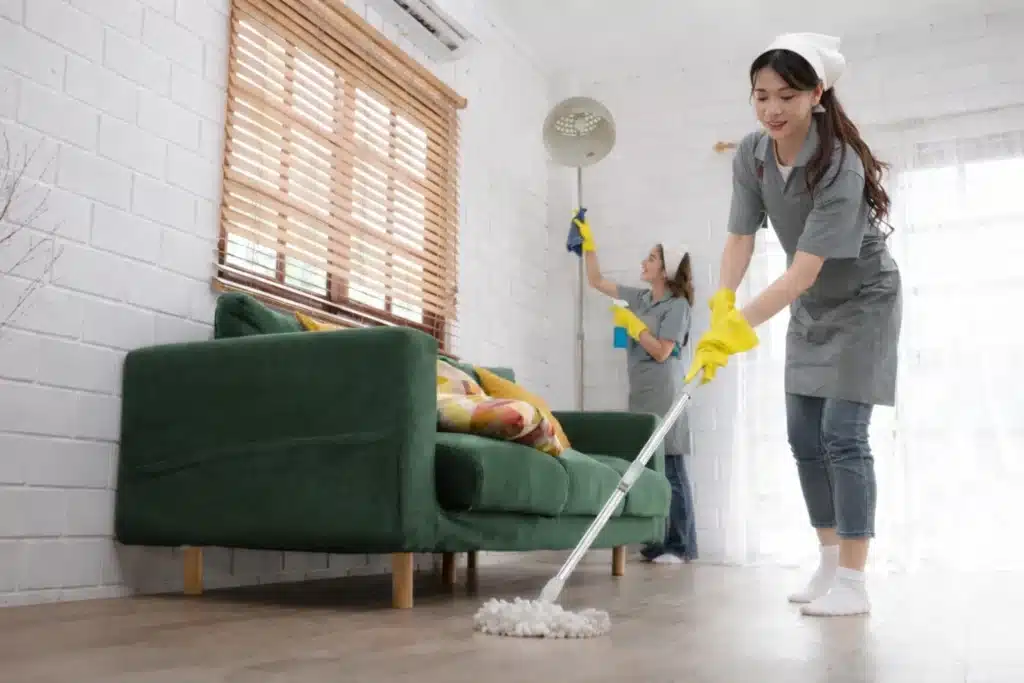
A quick sweep might make the floor look cleaner, but it will not necessarily deal with the dust sitting on higher surfaces or residue around the newly installed fixtures.
A proper post-renovation clean would work through the property systematically, including the kitchen, bathrooms, windows, floors, fixtures, and common areas. Only after this stage would the homeowners start moving their furniture and belongings back in.
This is also why clients often ask cleaning companies about the difference between a normal house cleaning and a post-renovation service. The amount of detailed work can be quite different.
When Should You Book Post Renovation Cleaning?
The best time is generally after the renovation work that creates dust and debris has finished, rather than while contractors are still actively working.
Before booking, check that:
- Major construction work is completed.
- Contractors have removed their equipment and larger debris.
- Painting or installation work is finished.
- Any required ventilation period has been considered.
- The property is ready for detailed cleaning.
For larger renovations, it can also be useful to coordinate the cleaning date with your contractor so that another round of construction does not undo the cleaning.
Is Professional Post Renovation Cleaning Worth It?
For a small DIY renovation, homeowners may be able to handle some of the cleaning themselves. However, larger projects can make professional cleaning worthwhile because the work involves many surfaces and often requires more time than expected.
A professional team can also follow a systematic cleaning process instead of simply cleaning the most visible areas. This is especially useful when fine construction dust has settled on windows, floors, cabinets, fixtures, and other hard-to-reach surfaces.
If you have recently completed a renovation in Singapore, you can learn more about GT Environmental’s post renovation cleaning service and the areas included in the cleaning process.
Conclusion: Get Your Renovated Space Ready to Use
Post renovation cleaning is the final step that turns a newly renovated property into a genuinely clean, usable space. It goes beyond everyday housekeeping by focusing on construction dust, residue, windows, fixtures, kitchens, bathrooms, and other areas affected by renovation work.
If you have recently completed a renovation in Singapore and do not want to spend days dealing with fine dust and leftover residue, professional help can make the final stage much easier.
For a more thorough clean after renovation, visit GT Environmental to learn more about its cleaning services and request a quotation.
Frequently Asked Questions
What is post renovation cleaning?
Post renovation cleaning is a detailed cleaning service performed after renovation or construction work. It removes dust, debris, surface residue, and other mess left behind before the property is occupied.
Is post renovation cleaning the same as deep cleaning?
Not exactly. Both can involve detailed cleaning, but post-renovation cleaning specifically addresses mess created by renovation or construction work, such as fine construction dust and leftover residue.
How long does post renovation cleaning take?
It depends on the property’s size, renovation scope, amount of dust and debris, and areas that need cleaning. A larger home or heavily renovated property will generally require more time than a smaller space with light renovation work.
Should I clean before or after renovation?
Post-renovation cleaning should be done after the renovation work is substantially completed. Cleaning too early can mean dust and debris from remaining work simply make the property dirty again.
Does post renovation cleaning remove formaldehyde?
Cleaning can remove dust and surface residue, but it does not replace ventilation or other measures for managing formaldehyde emissions. NEA recommends ventilation as the most effective way to reduce formaldehyde in indoor spaces.