


Following office cleaning guidelines in singapore helps businesses maintain a cleaner and more comfortable workplace. These guidelines cover routine cleaning, high-touch surfaces, washroom hygiene, waste disposal, and periodic deep cleaning. By applying office cleaning guidelines in singapore consistently, businesses can establish clear responsibilities and maintain better cleaning standards across different areas of the office.
In Singapore, the National Environment Agency (NEA) provides cleaning procedure guides for different environments, including offices, with guidance on cleaning methods, equipment, and safety measures. Businesses can use these resources alongside a practical cleaning schedule to maintain consistent standards.
1. What Are the Main Office Cleaning Guidelines in Singapore?
The main office cleaning guidelines in singapore focus on keeping workstations clean, maintaining shared facilities, managing waste properly, and paying attention to frequently touched surfaces. A suitable cleaning routine should reflect the number of employees, office layout, and daily foot traffic. Businesses can use these office cleaning guidelines in singapore to develop a practical checklist for cleaners and supervisors.
A practical office cleaning plan should cover the following areas:
- Workstations: Remove dust, clean accessible surfaces, and empty waste bins.
- Meeting rooms: Wipe tables, clean frequently touched equipment, and tidy shared spaces after use.
- Pantry areas: Clean countertops, sinks, dining tables, and appliance exteriors.
- Washrooms: Clean toilets, sinks, mirrors, floors, and frequently touched fixtures.
- Floors and carpets: Remove dust, dirt, and debris through suitable sweeping, mopping, or vacuuming methods.
- High-touch surfaces: Pay attention to door handles, switches, lift buttons, shared equipment, and reception counters.
The NEA’s cleaning industry guidance includes pictorial procedures for cleaning hard floors, carpets, and washrooms. These resources can help cleaning teams follow consistent methods rather than relying on informal routines.
2. How Often Should an Office Be Cleaned?
The recommended frequency in office cleaning guidelines in singapore depends on how often each area is used and how quickly dirt accumulates. Workstations and shared facilities may need daily attention, while carpets and glass partitions can follow a periodic schedule. Reviewing office cleaning guidelines in singapore regularly helps businesses adjust their cleaning plans when workplace needs change.
The following schedule provides a practical starting point. It is a general recommendation, not a universal legal requirement.
| Office area | Suggested frequency | Main cleaning tasks |
|---|---|---|
| Workstations | Daily or as needed | Remove dust, wipe accessible surfaces, empty bins |
| Washrooms | At least daily; inspect more frequently | Clean fixtures, mop floors, replenish supplies |
| Pantry and dining areas | Daily and after use | Clean tables, counters, sinks, and spills |
| Door handles and switches | Daily, with additional attention as needed | Clean and disinfect suitable high-touch surfaces |
| Meeting rooms | After use or daily | Wipe tables, tidy chairs, clean shared surfaces |
| Carpets | Vacuum regularly; deep clean periodically | Remove dust and accumulated dirt |
| Windows and glass partitions | Weekly or as needed | Remove fingerprints, smudges, and visible marks |
| Storage areas | Weekly or according to use | Remove dust and keep walkways clear |
The schedule should be reviewed regularly. For example, a pantry used by 40 employees may require attention more than once a day, while a storage room with limited foot traffic may not need daily cleaning.
3. Which Cleaning Tasks Should Be Prioritised?
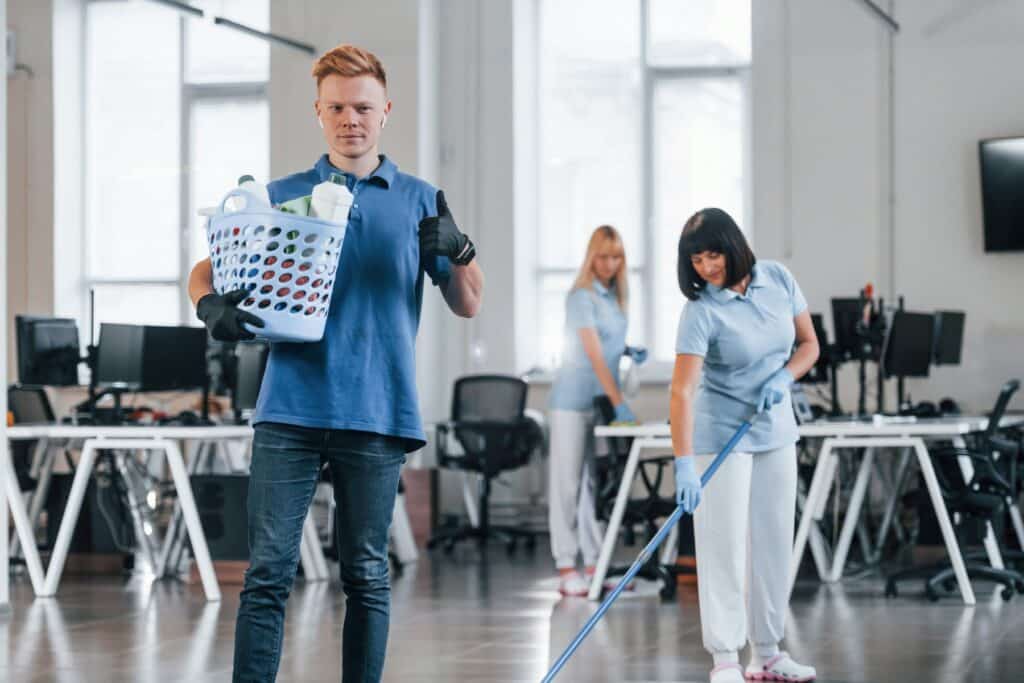
Not every cleaning task carries the same priority. A well-organised plan separates routine maintenance from periodic deep cleaning so that essential hygiene tasks are not overlooked.
Daily Cleaning
Daily cleaning keeps the office presentable and addresses dirt that accumulates during normal operations. Key tasks include:
- Empty waste bins and dispose of rubbish appropriately.
- Clean workstations and accessible shared surfaces.
- Clean pantry countertops, sinks, and dining tables.
- Clean washrooms and check soap and other essential supplies.
- Sweep, mop, or vacuum floors according to the surface type.
- Check for spills, unpleasant odours, and visible dirt.
Weekly Cleaning
Weekly tasks address areas that may not need attention every day. These can include cleaning glass partitions, dusting accessible fixtures, cleaning less frequently used meeting rooms, and checking corners where dust tends to accumulate.
Periodic Deep Cleaning
Deep cleaning targets areas that routine maintenance may not fully address. Depending on the workplace, this may include carpet extraction, upholstery cleaning, intensive pantry cleaning, and detailed floor maintenance.
Businesses should also arrange additional cleaning when needed, such as after renovation work, office relocation, or an event that leaves shared spaces unusually dirty.
4. Follow Safe and Suitable Cleaning Procedures
Effective office cleaning guidelines in singapore should address not only cleanliness but also the safety of cleaners and employees. Using the wrong cleaning chemical, mixing incompatible products, or leaving wet floors unattended can create avoidable hazards.
Follow these practices when planning cleaning work:
- Use suitable products: Select cleaning agents according to the surface and manufacturer’s instructions.
- Avoid mixing chemicals: Never combine cleaning products unless the manufacturer explicitly states that it is safe.
- Provide ventilation: Follow product instructions and ensure adequate ventilation where required.
- Use warning signs: Mark wet floors and restrict access to areas where cleaning could create slip hazards.
- Store chemicals safely: Keep products labelled and away from food, employee belongings, and unauthorised access.
- Use appropriate protective equipment: Select gloves and other protective equipment according to the task and product instructions.
- Keep walkways clear: Store equipment and cleaning supplies where they will not obstruct emergency routes.
5. How Can Businesses Monitor Office Cleaning Standards?
Consistent inspections help businesses determine whether their office cleaning guidelines in singapore are being followed. A written checklist can record completed tasks, identify recurring problems, and clarify who is responsible for follow-up. Reviewing these records makes it easier to improve cleaning routines without adding unnecessary work.
A practical monitoring process includes:
- Create a checklist: List the tasks required for each area and specify how often they should be completed.
- Assign responsibility: Make clear who performs the cleaning and who checks the results.
- Inspect completed work: Look for visible dirt, overflowing bins, wet floors, and empty washroom supplies.
- Record problems: Document missed tasks, recurring complaints, and areas that need additional attention.
- Review the schedule: Adjust cleaning frequency when employee numbers, office use, or hygiene requirements change.
6. Should You Hire a Professional Office Cleaning Service?
Professional cleaners can help businesses maintain a consistent schedule, especially when the office has multiple rooms, shared facilities, or specific cleaning requirements. They can also support periodic tasks that require specialised equipment or more detailed work.
When comparing providers, consider:
- The cleaning tasks included in the service agreement.
- The frequency and timing of each visit.
- Staff training and workplace safety procedures.
- The cleaning products and equipment used.
- How inspections, complaints, and missed tasks are handled.
- Whether the service can adapt when office requirements change.
Businesses should also consider the budget. Read this guide to office cleaning cost in Singapore 2026 to understand the factors that influence pricing and compare service arrangements.
7. Office Cleaning Guidelines in Singapore for High-Touch Surfaces
High-touch surfaces require regular attention because they are handled by multiple employees throughout the day. As part of office cleaning guidelines in singapore, businesses should identify shared surfaces and establish a consistent cleaning routine based on usage.
Common high-touch areas include:
- Door handles, light switches, and lift buttons
- Shared keyboards, telephones, and office equipment
- Meeting room tables and chair armrests
- Reception counters and shared desks
- Pantry handles, taps, and appliance controls
Clean surfaces using products suitable for the material, following the manufacturer’s instructions. Disinfect surfaces when appropriate, particularly when there is a specific hygiene concern. Cleaning and disinfection are not identical: cleaning removes dirt, while disinfection uses suitable products to reduce microorganisms on surfaces.
Businesses should also encourage employees to keep shared workstations tidy and report spills promptly. These simple measures support the regular cleaning programme without replacing the work of the cleaning team.
8. Office Cleaning Guidelines in Singapore for Pantry and Washroom Hygiene
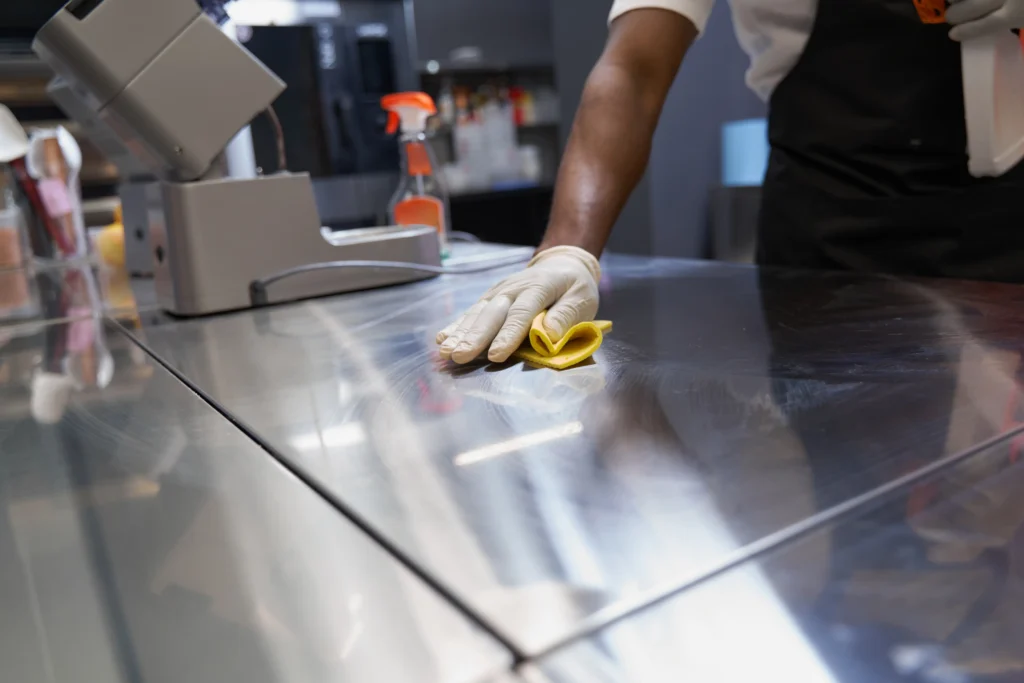
Pantries and washrooms need particular attention because they are shared facilities where dirt, moisture, and waste can accumulate quickly. Effective office cleaning guidelines in singapore should establish clear procedures for these spaces and identify which tasks must be checked during each cleaning visit.
Pantry Cleaning Checklist
- Clean food preparation surfaces, dining tables, and sinks.
- Remove food waste and empty rubbish bins.
- Wipe appliance exteriors and frequently touched handles.
- Clean spills promptly to prevent stains and pest attraction.
- Keep cleaning chemicals separate from food and utensils.
Washroom Cleaning Checklist
- Clean and disinfect toilets and suitable contact surfaces.
- Wash sinks, taps, and surrounding countertops.
- Mop floors and place warning signs where surfaces are wet.
- Replenish soap, toilet paper, and other required supplies.
- Check for leaks, unpleasant odours, and blocked drains.
The cleaning frequency should reflect how heavily these facilities are used. A busy office may need additional inspections during the day, while a smaller workplace may require fewer checks. A documented checklist helps cleaners and supervisors confirm that essential tasks have been completed.
9. How to Create an Effective Office Cleaning Plan
A structured cleaning plan turns office cleaning guidelines in singapore into clear daily responsibilities. Businesses should consider office size, employee numbers, shared facilities, and operating hours before setting the schedule.
Follow these steps to develop a practical plan:
- Inspect the workplace: Identify high-traffic areas, shared equipment, washrooms, pantry spaces, and surfaces that collect dust.
- Set cleaning priorities: Separate daily tasks from weekly maintenance and periodic deep cleaning.
- Assign responsibilities: Specify who handles each task and who checks the results.
- Prepare a checklist: Record the required tasks, cleaning frequency, and any issues that need follow-up.
- Review performance: Adjust the schedule when the office becomes busier or recurring cleaning problems appear.
Businesses that need external support can review GT Enviro’s office cleaning services to explore options for maintaining a consistent workplace cleaning schedule.
Conclusion: Follow Office Cleaning Guidelines in Singapore for a Healthier Workplace
Following office cleaning guidelines in singapore helps businesses maintain clean workstations, hygienic shared facilities, and safer walkways. A reliable cleaning plan should cover daily maintenance, high-touch surfaces, pantry and washroom hygiene, periodic deep cleaning, and regular quality checks.
The most effective approach is to match the cleaning schedule to the way the workplace is used rather than applying the same routine to every office. Businesses should also review their cleaning arrangements as staffing levels and operational needs change.
For companies seeking professional support, visit GT Enviro to explore cleaning services and discuss an arrangement that suits your workplace.
Frequently Asked Questions
What Are the Main Office Cleaning Guidelines in Singapore?
The main office cleaning guidelines in singapore cover workstation cleaning, washroom hygiene, pantry maintenance, waste disposal, and regular cleaning of high-touch surfaces. Businesses should establish a cleaning schedule based on office size, employee numbers, and daily usage.
How Often Should Offices Be Cleaned in Singapore?
Under practical office cleaning guidelines in singapore, workstations, pantry areas, and washrooms generally need daily attention, while high-traffic areas may require more frequent checks. Carpets, glass partitions, and less frequently used spaces can follow a periodic cleaning schedule based on their condition.
What should an office cleaning checklist include?
A checklist should cover workstations, floors, waste bins, pantry areas, washrooms, meeting rooms, and high-touch surfaces. It should also identify cleaning frequency, responsible personnel, and a process for recording problems.
Is professional office cleaning necessary for small businesses?
Not always. Some small businesses can manage routine tasks internally, depending on office size and usage. Professional cleaning may be useful when consistent maintenance, specialised equipment, or additional cleaning support is needed.
How can a business maintain consistent cleaning quality?
Use a written cleaning schedule, assign responsibilities, inspect completed work, and record recurring issues. Review the plan periodically to ensure it continues to meet the needs of the workplace.