

High rise building cleaning helps keep a building’s exterior clean, presentable, and free from accumulated dirt, grime, and environmental deposits. Two common methods are rope access, which allows trained technicians to work while suspended on ropes, and gondola systems, which provide a platform for cleaning elevated surfaces. Choosing the right method for high rise building cleaning depends on the building’s design, facade condition, access requirements, and the type of cleaning needed.
For property managers in Singapore, choosing between these methods involves more than comparing prices. Safety arrangements, setup time, maintenance requirements, and the amount of facade that needs attention all influence the decision.
What Is Rope Access in High Rise Building Cleaning?
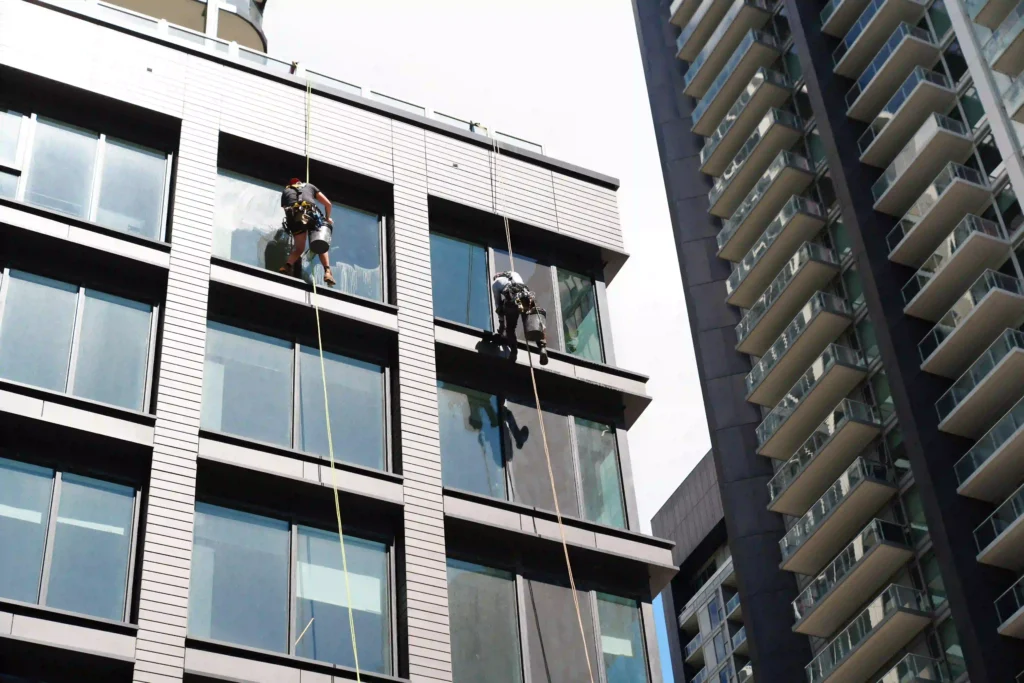
Rope access is a method of reaching elevated surfaces using specialised ropes, harnesses, and associated safety equipment. Trained technicians descend from approved anchor points to clean windows, remove surface grime, and reach sections of a building that may be difficult to access with conventional equipment.
One of its main advantages is flexibility. Rope access can be useful for buildings with narrow sections, irregular facades, or limited space around the property.
When Is Rope Access the Better Choice?
Rope access is a method used in high rise building cleaning to reach exterior surfaces with specialised ropes, harnesses, and safety equipment. Trained technicians descend from suitable anchor points to clean windows, remove surface grime, and reach sections that may be difficult to access with conventional equipment.
Rope access may be suitable when:
- The facade has awkward shapes. Recessed windows, narrow ledges, and architectural features can make suspended rope access more practical.
- Ground space is limited. Unlike equipment that requires a large operating area, rope access can reduce the need for machinery at ground level.
- Only selected sections need cleaning. Technicians can focus on particular elevations or hard-to-reach areas without necessarily setting up a full suspended platform.
- The work requires flexibility. Rope access can accommodate certain facade shapes that are difficult to reach using a conventional gondola.
However, rope access requires careful planning. Suitable anchorage, inspected equipment, trained personnel, weather assessments, and an effective rescue plan are essential. The method should only be used when the building and work conditions allow it to be carried out safely.
What Is a Gondola System for High Rise Cleaning?
A gondola system provides a suspended platform for workers performing high rise building cleaning. The platform allows cleaners to carry their equipment while moving along the building’s exterior, making it a practical option for large glass surfaces and continuous facade sections.
Unlike rope access, a gondola provides a working platform where cleaners can stand while moving along a facade. This can be useful when a project involves large, relatively uniform exterior surfaces that require repeated passes.
When Should You Consider a Gondola?
A gondola may be appropriate when:
- Large facade areas need regular cleaning. A platform can support a consistent cleaning routine across broad sections of glass or cladding.
- The building has a suitable permanent system. An existing, properly maintained BMU may reduce the need to arrange a separate access solution.
- Workers need a stable working platform. The platform can accommodate cleaning tools and supplies within its rated capacity.
- The facade is relatively uniform. Long, continuous elevations may be easier to service using a platform that moves vertically along the building.
Gondola systems also have limitations. They require suitable suspension arrangements, adequate clearance, inspections, and proper operation. Building projections, narrow spaces, and irregular architectural features may restrict platform movement.
Rope Access vs Gondola: Key Differences
One advantage of rope access in high rise building cleaning is that technicians can reach areas where larger equipment may have limited access. This is useful for buildings with recessed windows, narrow ledges, or unusual architectural features. With suitable anchor points and proper safety arrangements, rope access can help cleaners work on specific facade sections without installing a full suspended platform.
| Comparison factor | Rope access | Gondola system |
|---|---|---|
| Access method | Technicians work while suspended on ropes | Workers use a suspended platform |
| Best suited for | Irregular facades and difficult-to-reach sections | Large, continuous facade areas |
| Setup | Can be relatively quick when suitable anchor points are available | Depends on the existing system or temporary installation |
| Ground space | Usually requires less space for access equipment | May require a controlled area beneath the platform |
| Working area | Individual technicians move along rope lines | Workers operate from a shared platform |
| Equipment requirements | Ropes, harnesses, connectors, anchors, and rescue equipment | Platform, suspension equipment, controls, and associated safety systems |
| Building compatibility | Depends on safe anchorage and facade geometry | Depends on platform access, suspension arrangements, and clearances |
| Cost considerations | Influenced by labour, setup, access difficulty, and duration | Influenced by equipment, installation, inspections, and operating time |
Neither method is automatically safer, faster, or cheaper in every situation. A proper assessment should consider the specific building, the work scope, and the controls required for each option.
Which Method Is Safer for High Rise Building Cleaning?
Safety is a central consideration in high rise building cleaning, whether workers use rope access or a gondola system. Both methods involve working at height and require suitable equipment, trained personnel, proper risk assessments, and emergency procedures. The safest option depends on the building’s conditions and how effectively the required safety controls can be implemented.
The importance of these controls is reflected in industry data. According to the Industrial Rope Access Trade Association (IRATA), its members reported 33,665,594 working hours and 279 incident reports in 2024. The reports included two fatalities, two major injuries, and other injuries and dangerous occurrences. These figures cover rope access activities reported by IRATA members across different industries; they do not establish that rope access is safer or less safe than gondola operation.
Before approving a high-rise cleaning project, building managers should check that the contractor has appropriate safety arrangements, including:
- A site-specific risk assessment and method statement.
- Inspected and suitable access equipment.
- Competent, appropriately trained workers and supervision.
- Secure access arrangements and protection against dropped objects.
- Weather monitoring and clear stop-work criteria.
- An emergency response and rescue plan.
- Coordination with building management and affected occupants.
In Singapore, work at height also needs to be planned in accordance with applicable workplace safety and health requirements. The access method should be selected only after the risks and available controls have been assessed.
How to Choose the Right Cleaning Method
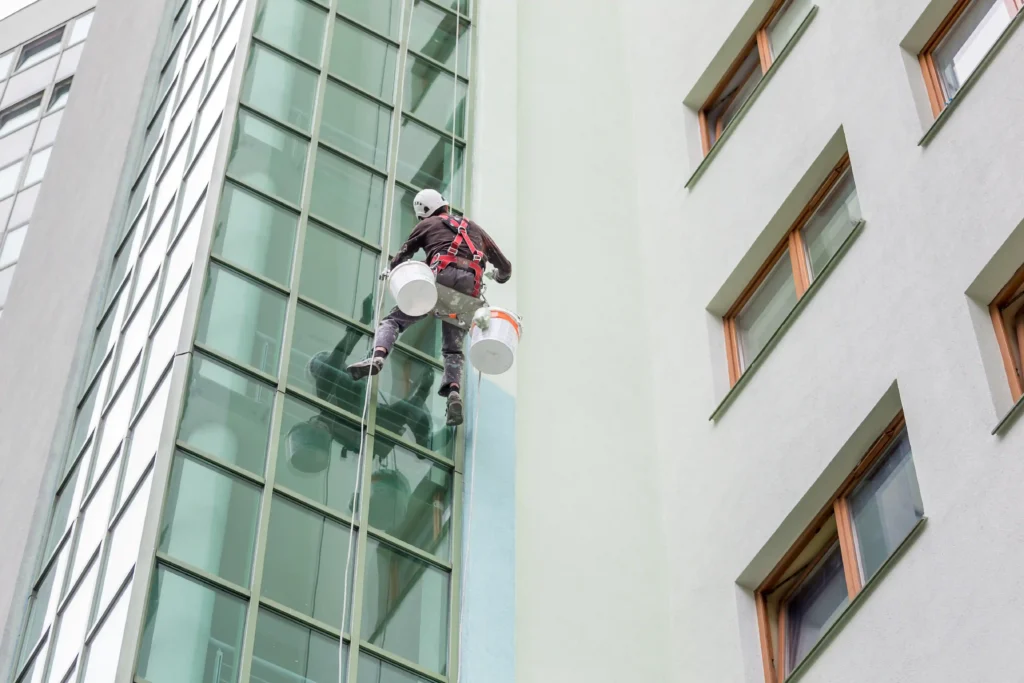
The decision becomes easier when the building’s physical conditions and cleaning requirements are considered together.
Follow these steps before arranging the work:
- Inspect the facade. Identify the exterior materials, building geometry, areas of heavy staining, and any damaged or sensitive surfaces.
- Check available access systems. Determine whether suitable roof anchors or a permanent gondola are available and whether the equipment is fit for use.
- Define the scope. Establish whether the job covers the entire building, selected elevations, windows only, or additional exterior surfaces.
- Assess safety and site conditions. Review suspension arrangements, ground-level access, pedestrian movement, weather exposure, and rescue provisions.
- Compare the full cost. Consider preparation, labour, equipment, cleaning duration, and any disruption to building operations.
- Arrange a site assessment. Ask a qualified contractor to recommend a method based on the actual conditions rather than choosing equipment based on price alone.
A Practical Example
Consider a commercial building in Singapore with a narrow facade section, several recessed windows, and limited space around its entrance.
A gondola may be suitable for the building’s broad, uninterrupted elevations, provided its system can reach them safely. Rope access may be more practical for the narrower sections that a platform cannot reach easily.
In this illustrative scenario, using one method for every elevation could create unnecessary complications. A site assessment may instead identify a suitable combination of access methods, subject to the building’s design and safety requirements.
This approach allows the cleaning plan to reflect the building rather than forcing the building to fit a particular method.
Why Professional Facade Assessment Matters
Singapore’s humidity, rainfall, and airborne pollutants can leave dirt and staining on exterior surfaces. The appropriate cleaning technique also depends on whether the facade consists of glass, aluminium cladding, painted concrete, or stone.
Professional building facade cleaning involves more than reaching the exterior. The contractor must consider the surface material, the type of deposits, the cleaning products, and the access method to avoid unnecessary damage.
GT Environmental provides professional facade cleaning services in Singapore for commercial buildings and other properties that require regular exterior maintenance. Through its facade cleaning services, property managers can explore suitable cleaning solutions based on facade materials, surface conditions, and building access requirements.
Factors That Affect High Rise Building Cleaning Methods
Choosing the right method for high rise building cleaning depends on more than the height of the property. The facade design, surrounding environment, and condition of the building all influence how cleaners can reach exterior surfaces safely and efficiently.
Several factors should be considered before selecting rope access or a gondola system:
- Building design: Recessed windows, curved walls, and protruding structures can affect how easily cleaning equipment reaches the facade.
- Cleaning requirements: Routine window cleaning may require a different approach from removing stubborn stains or cleaning heavily soiled cladding.
- Equipment availability: Buildings with existing suspended access systems may have more options, provided the equipment is suitable and properly maintained.
- Weather conditions: Wind and rain can affect work at height, so cleaning schedules should account for changing weather.
- Maintenance frequency: Buildings that require regular high rise building cleaning may benefit from a planned access strategy that considers both efficiency and long-term costs.
For property managers, discussing these factors with a professional cleaning contractor can help determine whether rope access, a gondola, or a combination of methods is appropriate. A site assessment also helps establish a realistic cleaning schedule and identify potential access restrictions before work begins.
Conclusion: Choose the Right High Rise Building Cleaning Method with GT Environmental
Rope access and gondola systems each offer practical advantages for high rise building cleaning. Rope access provides flexibility for irregular facades and hard-to-reach areas, while gondolas can be suitable for cleaning broad, continuous exterior surfaces. The right choice depends on the building’s design, available equipment, cleaning requirements, budget, and safety arrangements.
GT Environmental provides facade cleaning services in Singapore for properties with different exterior maintenance needs. If you are planning high rise building cleaning for your property, visit GT Environmental to explore the available services and discuss a suitable cleaning approach.
Frequently Asked Questions
Is rope access better than a gondola for high rise building cleaning?
Rope access can be more suitable for irregular facades and restricted areas, while gondolas can work well on broad, continuous elevations. The better option depends on the building design, available equipment, cleaning requirements, and safety assessment.
Is rope access safe for cleaning tall buildings?
Rope access can be used for high-rise cleaning when suitable equipment, competent personnel, secure anchorage, risk controls, and emergency procedures are in place. It is not risk-free, and each project requires an assessment of its working conditions.
Is gondola cleaning more expensive than rope access?
Not necessarily. Costs depend on equipment availability, installation requirements, labour, building height, facade complexity, and project duration. An existing suitable gondola may be economical for repeated work, while rope access may reduce setup requirements for certain smaller or difficult-to-reach areas.
How often should a high-rise building facade be cleaned?
There is no single schedule for every building. Cleaning frequency depends on the surrounding environment, facade material, exposure to pollution, visible staining, and property maintenance requirements. A professional assessment can help establish a suitable schedule.
Can rope access and gondola systems be used on the same building?
Yes, where the building design and site conditions permit both methods to be used safely. A contractor may recommend different access methods for separate elevations if one system cannot reach every area efficiently.