


A weekly office cleaning checklist helps businesses maintain a clean, organised, and hygienic workplace. By following a consistent schedule, cleaning teams can manage workstations, meeting rooms, pantry areas, washrooms, and floors without overlooking important tasks. For offices in Singapore, a practical weekly office cleaning checklist also helps support daily cleaning routines and maintain a comfortable environment for employees and visitors.
For offices in Singapore, a structured cleaning routine should reflect the number of employees, workplace layout, and how frequently different areas are used.
1. What Should a Weekly Office Cleaning Checklist Include?
A weekly office cleaning checklist should cover workstations, meeting rooms, pantry areas, washrooms, floors, and shared equipment. The aim is to address areas that need more detailed attention than routine daily cleaning.
Use the following checklist as a starting point and adapt it to your workplace.
| Office area | Weekly cleaning task | Why it matters |
|---|---|---|
| Workstations | Dust desk surfaces, shelves, and accessible equipment | Prevents dust and dirt from accumulating |
| Meeting rooms | Clean tables, chair surfaces, and glass partitions | Keeps shared spaces ready for use |
| Pantry | Clean appliance exteriors, cabinet handles, and less accessible surfaces | Helps maintain food preparation and dining areas |
| Washrooms | Detail-clean fixtures, corners, and partitions | Supports consistent hygiene |
| Floors | Clean edges, corners, and areas beneath movable furniture where accessible | Removes accumulated dust and debris |
| Glass surfaces | Remove fingerprints and visible marks | Keeps partitions and internal windows presentable |
| Shared equipment | Clean suitable contact surfaces on printers and other shared devices | Maintains cleaner shared work areas |
| Waste areas | Inspect bins and surrounding floors | Helps prevent odours and pest attraction |
The exact frequency depends on usage. A busy office may need some of these tasks more than once a week, while a smaller workplace may require less frequent attention.
2. Weekly Office Cleaning Checklist for Workstations and Meeting Rooms
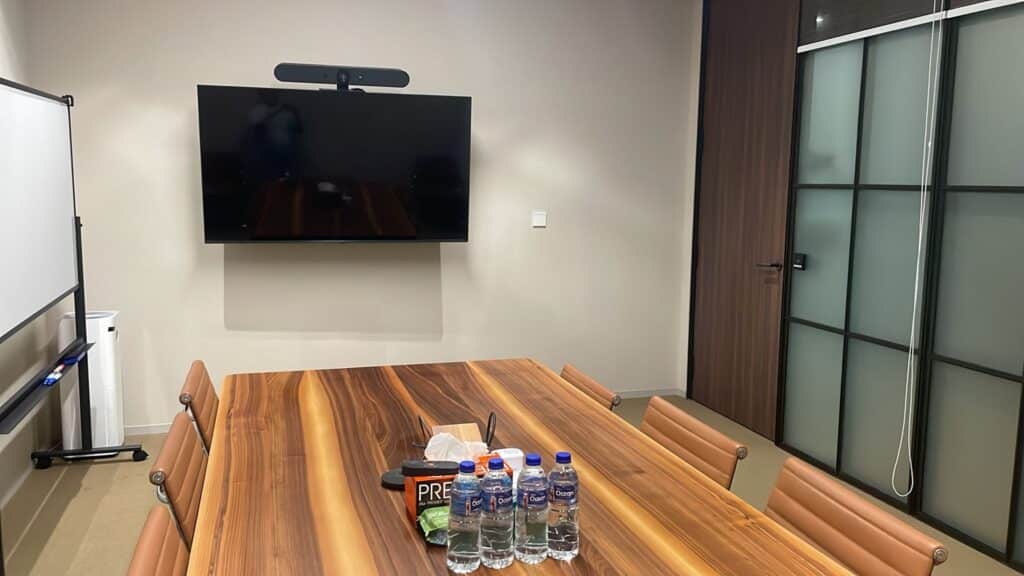
Workstations and meeting rooms often collect dust because employees use them throughout the day. A detailed weekly clean helps address surfaces that may be missed during quick daily tidying.
Workstation Cleaning Tasks
Include these tasks in your weekly office cleaning checklist:
- Dust desks, shelves, and accessible furniture surfaces.
- Wipe suitable surfaces using products compatible with the material.
- Clean accessible areas around monitor stands and office equipment.
- Remove visible marks from cabinet fronts and storage units.
- Check for dust and debris beneath movable chairs and furniture.
- Empty bins and clean the surrounding area when necessary.
Employees should secure personal documents and belongings before cleaning. Electronic equipment should be cleaned according to the manufacturer’s instructions, and cleaning liquids should not be sprayed directly onto keyboards, monitors, or other electronics.
Meeting Room Cleaning Tasks
Meeting rooms are shared by employees, clients, and visitors, so they benefit from a consistent cleaning routine.
- Wipe meeting tables and chair armrests.
- Clean glass partitions and remove visible fingerprints.
- Clean suitable shared contact surfaces, such as remote controls.
- Check corners and accessible areas for dust.
- Empty rubbish bins and organise the room for the next meeting.
These tasks can be added to a workplace checklist so cleaners and supervisors know what needs to be completed each week.
3. Weekly Office Cleaning Checklist for Pantry and Washroom Hygiene
Pantries and washrooms need regular maintenance because they experience frequent use and can accumulate moisture, food residue, and waste. A weekly office cleaning checklist should include detailed cleaning tasks in addition to daily upkeep.
Pantry Tasks
- Clean the exterior of refrigerators, microwaves, and other shared appliances.
- Wipe cabinet handles, shelves, and accessible surfaces.
- Clean sinks and taps thoroughly.
- Remove food residue and inspect areas where spills may accumulate.
- Check bins for odours and clean the surrounding floor.
- Identify expired food according to the office’s food storage policy.
Food preparation surfaces should be cleaned using suitable products, with chemicals kept separate from food and utensils.
Washroom Tasks
- Detail-clean toilet fixtures, sinks, and taps.
- Clean partitions, accessible wall areas, and corners.
- Remove visible marks from mirrors and other glass surfaces.
- Check dispensers and report damaged fixtures or leaks.
- Inspect floor edges and areas that may be missed during routine mopping.
Daily washroom cleaning should continue as needed; the weekly checklist supplements it rather than replacing it.
4. What Is the Difference Between Daily and Weekly Office Cleaning?
Daily cleaning focuses on immediate hygiene and visible dirt, while weekly cleaning addresses accumulated dust and areas that need more detailed attention. Both are important for maintaining a consistently clean office.
| Task | Daily cleaning | Weekly cleaning |
|---|---|---|
| Emptying rubbish bins | Yes, as needed | Inspect bins and surrounding areas |
| Wiping pantry tables | Yes | Detail-clean accessible surfaces |
| Cleaning washrooms | Routine cleaning and replenishment | Detail-clean corners and partitions |
| Dusting desks | As needed | Clean shelves and less accessible surfaces |
| Cleaning glass partitions | Spot-clean visible marks | More thorough cleaning |
| Vacuuming carpets | Based on traffic and visible dirt | Inspect edges and less accessible areas |
| Cleaning shared equipment | As needed | Check suitable contact surfaces and accumulated dust |
This comparison is a general guide rather than a fixed standard. Actual cleaning frequency should reflect workplace usage, hygiene requirements, and the condition of each area.
5. How to Implement a Weekly Office Cleaning Checklist
To get the best results from your weekly office cleaning checklist, assign clear responsibilities and establish a regular cleaning schedule. Start by identifying the areas that need attention, then divide tasks between employees and professional cleaners where appropriate.
Review the weekly office cleaning checklist regularly to ensure that all tasks are completed. For example, a team can inspect workstations, disinfect shared surfaces, clean meeting rooms, and check pantry hygiene at the end of each week. Adjust the checklist when office usage changes or certain areas require more frequent attention.
6. Common Mistakes to Avoid When Cleaning an Office
Even a detailed weekly office cleaning checklist may be ineffective if tasks are rushed or responsibilities are unclear. Avoid these common mistakes:
- Ignoring high-touch surfaces: Shared handles, switches, and equipment may need cleaning more frequently than once a week.
- Using unsuitable cleaning products: Always follow product instructions and check compatibility with the surface.
- Cleaning around clutter: Move accessible items safely where necessary instead of leaving dust underneath them.
- Using the same cloth everywhere: Separate cleaning materials for different areas to reduce cross-contamination.
- Skipping inspections: A completed checklist should be supported by visual checks and follow-up when problems are identified.
- Treating weekly cleaning as a substitute for daily upkeep: Spills, rubbish, and heavily used facilities may need immediate attention.
Businesses should also ensure that wet floors are clearly marked and that cleaning equipment does not obstruct walkways.
7. When Should You Hire a Professional Office Cleaning Service?
Professional cleaning support may be useful when an office has multiple shared facilities, a large floor area, or limited in-house resources. A cleaning provider can help organise recurring tasks and perform more detailed cleaning that may be difficult to fit into employees’ normal responsibilities.
Before choosing a provider, consider:
- The areas and tasks included in the service.
- The frequency of routine and detailed cleaning.
- Staff training and cleaning procedures.
- The equipment and products used.
- How missed tasks and service requests are handled.
Businesses can also refer to these office cleaning guidelines in Singapore when developing a broader workplace hygiene plan.
For ongoing cleaning support, explore GT Enviro’s office cleaning services to discuss an arrangement that suits your office layout, schedule, and cleaning requirements.
Conclusion: Maintain a Cleaner Office with GT Enviro
Following a weekly office cleaning checklist makes it easier to organise cleaning duties, monitor completed tasks, and maintain a more comfortable workplace. Businesses should combine weekly cleaning with daily maintenance and periodic deep cleaning based on office needs.
The best checklist is one that reflects how your office operates. Review it as employee numbers, room usage, and cleaning needs change, and make sure responsibilities are clear. For businesses that need additional support, visit GT Enviro to explore office cleaning services and discuss a suitable cleaning arrangement.
Frequently Asked Questions
What should a weekly office cleaning checklist include?
A weekly office cleaning checklist should cover workstations, meeting rooms, pantry areas, washrooms, glass partitions, floors, and shared equipment. The exact tasks depend on office size, employee numbers, and how frequently each area is used.
How often should an office be deep cleaned?
The frequency depends on the office environment, surface types, and level of use. Some areas may need detailed cleaning weekly, while carpets and upholstery may follow a less frequent schedule based on their condition and maintenance requirements.
Should office cleaning be done daily or weekly?
Most offices benefit from both. Daily cleaning handles rubbish, spills, washrooms, pantry surfaces, and other immediate needs, while weekly cleaning addresses accumulated dust and less accessible areas.
How can I track office cleaning tasks?
Use a printed checklist, spreadsheet, or digital task management tool. Record the task, assigned person, completion date, and any problems that require follow-up. Periodic inspections help confirm that the work has been completed properly.
Can a professional cleaning company follow our existing checklist?
Many cleaning providers can discuss a client’s existing checklist and service requirements before agreeing on a schedule. Confirm the tasks, frequency, responsibilities, and inspection process in writing before the service begins.