


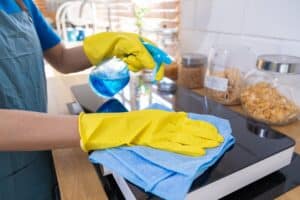
A post renovation cleaning checklist helps make sure dust, construction residue, paint marks, and other leftover mess are dealt with before a newly renovated space is used. Renovation cleaning is different from regular house cleaning because fine dust can settle on surfaces that may look clean at first.
The safest approach is to clean systematically, starting with larger debris and higher surfaces before working down to floors and detailed areas. This also helps avoid spreading the same dust around the property several times.
What Is Included in a Post Renovation Cleaning Checklist?
A proper post renovation cleaning checklist should cover more than visible dust. Renovation work can leave residue inside cabinets, around fixtures, on windows and along corners that are easy to overlook.
Before starting, prepare:
- Vacuum cleaner, preferably with a HEPA filter
- Microfiber cloths
- Mop and bucket
- Soft brushes and scrubbers
- Appropriate surface cleaners
- Glass cleaner
- Garbage bags
- Gloves and other suitable PPE
Post Renovation Cleaning Checklist: Room by Room

A room-by-room approach makes the post renovation cleaning checklist easier to follow. Instead of cleaning whatever catches your eye, finish one area before moving to the next.
1. Remove Construction Dust and Debris
Start by removing larger pieces of renovation waste before doing detailed cleaning.
Check for:
- Packaging and protective materials
- Small pieces of wood or tile
- Loose plaster or cement residue
- Dust around corners
- Debris underneath fixtures
- Leftover renovation materials
2. Clean Ceilings, Walls and High Surfaces
Dust naturally settles on higher surfaces and then falls onto lower ones, so these areas should be cleaned before the floor.
Wipe or vacuum:
- Ceiling fans
- Light fixtures
- Upper cabinets
- Shelves
- Door frames
- Wall surfaces where appropriate
- Air-conditioning vents
Be careful with newly painted walls. Some paint finishes may need time to fully cure, so avoid aggressive scrubbing unless the manufacturer’s instructions allow it.
3. Clean Windows and Glass
Windows can collect a surprising amount of renovation dust.
Clean the:
- Glass panels
- Window frames
- Window tracks
- Sills
- Accessible corners
For stubborn marks such as paint or adhesive, check the surface first. A sharp scraper or strong solvent can damage glass coatings, frames or newly installed finishes.
4. Deep Clean the Kitchen
The kitchen needs particular attention when completing a post renovation cleaning checklist, especially after cabinet installation, countertop work or appliance fitting.
Clean:
- Cabinet exteriors and interiors
- Sink and taps
- Backsplash
- Cooking surfaces
- Appliance exteriors
- Floor edges
- Areas underneath cabinets
5. Clean Bathrooms and Fixtures
Renovation dust can settle around newly installed bathroom fixtures even when they have protective coverings.
Check:
- Toilet and surrounding floor
- Sink and countertop
- Shower area
- Taps and fittings
- Mirrors
- Tiles
- Drains
- Glass shower panels
Pay particular attention to grout lines and corners. These areas can collect fine dust and residue that is not obvious from a distance.
6. Vacuum and Mop the Floors
Floors should generally be cleaned after the other surfaces.
First remove loose dust and debris using a suitable vacuum or dry-cleaning method. Then mop according to the flooring material.
Do not assume that more water means better cleaning. Timber, laminate, natural stone and other materials have different care requirements.
What Should You Clean First After Renovation?
| Cleaning Stage | Main Purpose | Examples |
|---|---|---|
| Debris removal | Remove larger waste | Packaging, plaster, renovation debris |
| High surfaces | Prevent dust from falling later | Fans, lights, shelves |
| Surface cleaning | Remove fine dust and residue | Walls, doors, cabinets |
| Detailed cleaning | Deal with specific areas | Kitchen, bathroom, windows |
| Floor cleaning | Remove settled dust | Vacuuming and mopping |
| Final inspection | Find missed areas | Corners, tracks, fixtures |
Following this order makes a post renovation cleaning checklist more practical because you are not repeatedly cleaning the same surfaces.
Why Post Renovation Cleaning Is Different From Regular Cleaning
Regular cleaning is mainly about maintaining an already usable space. Post renovation cleaning deals with the residue created by construction, installation and finishing work.
| Regular Cleaning | Post Renovation Cleaning |
|---|---|
| Removes everyday dirt | Removes renovation dust and residue |
| Usually recurring | Usually performed after renovation |
| Focuses on routine areas | Covers hidden and less accessible areas |
| Uses normal household cleaning methods | May require specialised equipment and techniques |
| Maintains cleanliness | Prepares the property for use |
This difference is important for homeowners, landlords, offices and commercial properties. A newly renovated space may look finished while still requiring considerable cleaning before it is comfortable to occupy.
A Simple Example After a Home Renovation
Consider a homeowner who has just completed a kitchen renovation. The cabinets and countertop look new, so the room appears ready to use.
After closer inspection, fine dust is sitting inside the cabinets, around the window track and underneath the countertop edge. There is also a small amount of adhesive residue near the backsplash.
This is exactly where a detailed post renovation cleaning checklist helps. Instead of only wiping the surfaces that are easy to see, the homeowner can work through the kitchen systematically and catch these smaller areas.
How to Use a Post Renovation Cleaning Checklist Effectively
A post renovation cleaning checklist works best when you use it as a sequence rather than simply checking tasks at random. Start with areas that create the most dust, then move toward detailed cleaning and finish with the floors.
Keep the post renovation cleaning checklist nearby while working through each room. Marking completed areas can help you keep track of cabinets, windows, fixtures and corners that are easy to forget after several hours of cleaning.
Post Renovation Cleaning Checklist for Different Property Types
The cleaning priorities can vary depending on the type of property being renovated. A post renovation cleaning checklist for a home may focus on kitchens, bathrooms, bedrooms and living areas, while an office or commercial property may require more attention to workspaces, flooring, glass surfaces and shared facilities.
For example, an office renovation may leave fine dust around desks, partitions, electrical fittings and air-conditioning vents. A retail space, meanwhile, may need its entrance, display areas and customer-facing surfaces cleaned carefully before reopening. Adjusting the post renovation cleaning checklist to the property helps make sure the final cleaning covers the areas that matter most.
When Should You Hire Professional Post Renovation Cleaners?
DIY cleaning can work for a small renovation, particularly when there is little dust and only a few rooms are affected. Larger renovation projects can be much more demanding, especially when fine dust has spread throughout the property.
Professional cleaning may be useful when:
- The entire home has been renovated
- There is heavy construction dust
- Multiple rooms require detailed cleaning
- Windows and hard-to-reach areas need attention
- The property has a tight move-in schedule
- The renovation involves a commercial or office space
GT Environmental provides professional cleaning services in Singapore, including post renovation cleaning for properties that need a thorough clean after renovation work. For properties that require a more comprehensive cleaning beyond routine maintenance, businesses and homeowners can also explore spring cleaning services in Singapore to address accumulated dust, dirt, and hard-to-reach areas.
Final Post Renovation Cleaning Checklist
Before considering the property ready, walk through each room once more.
Use this final post renovation cleaning checklist:
- No visible construction debris remains
- Floors are free from loose dust and residue
- Cabinets and drawers have been checked
- Windows and tracks have been cleaned
- Kitchen surfaces are clean
- Bathroom fixtures are free from dust and residue
- Doors, handles and switches have been wiped
- Air-conditioning vents are checked
- Hard-to-reach corners have been inspected
- The property has been properly ventilated
NEA also notes that renovation and indoor construction work can contribute to particulate matter indoors and recommends isolating renovation work areas and exhausting contaminants outdoors where applicable.
Conclusion: Complete Your Post Renovation Cleaning Properly
A post renovation cleaning checklist gives you a simple way to work through the property without overlooking the less obvious areas. Start with debris and dust, move from high surfaces down to the floors, give kitchens and bathrooms extra attention, and finish with a room-by-room inspection.
For homeowners, offices and commercial properties in Singapore that need help after renovation work, GT Environmental provides professional cleaning services designed for different property needs. To learn more about the available cleaning solutions, visit GT Environmental.
Frequently Asked Questions
How long does post renovation cleaning take?
It depends on the size and condition of the property and how extensive the renovation was. A single-room renovation may be completed relatively quickly, while a whole-home renovation can require considerably more time.
What should I clean first after renovation?
Start by removing larger debris, then clean high surfaces, walls, fixtures and windows before moving to the kitchen, bathroom and floors. This prevents dust from settling on areas you have already cleaned.
Is post renovation cleaning necessary?
Yes, particularly after major renovation work. Fine dust and residue can remain on surfaces even when the property looks clean. A detailed cleaning also helps prepare the space before furniture and personal belongings are brought back in.
Can I do post renovation cleaning myself?
You can handle a small renovation yourself if you have the appropriate equipment and enough time. For extensive renovation dust, multiple rooms or commercial spaces, professional cleaners may be more practical.
Should I clean before or after installing furniture?
It is generally easier to perform the main post-renovation clean before moving furniture into the property. You will have better access to floors, corners, cabinets and other areas that could become difficult to reach later.