


A commercial kitchen cleaning company helps restaurants, hotels, catering businesses, and other food service operators maintain clean kitchen environments by removing grease, food residue, and accumulated dirt from work surfaces and equipment. Professional cleaning is especially important in busy kitchens, where daily cooking can leave behind deposits that ordinary wiping may not fully remove. Choosing the right provider also helps businesses maintain hygiene standards, manage cleaning schedules, and keep kitchen operations running smoothly.
In Singapore, commercial kitchens deal with warm temperatures, humidity, and frequent cooking throughout the day. Grease can collect around cooking equipment, floors can become slippery, and dirt may accumulate in ventilation areas that are difficult to reach. A suitable cleaning plan should address these problems without disrupting food preparation more than necessary.
Why Do Commercial Kitchens Need Professional Cleaning?
A commercial kitchen cleaning company helps restaurants maintain cleaner food preparation areas by removing grease, food residue, and dirt that routine cleaning may miss. Regular professional cleaning also helps businesses manage hygiene risks and keep kitchen equipment in better condition.
1. Reduce Grease and Food Residue
Cooking oil and grease can accumulate on stovetops, splashbacks, extractor hoods, and nearby walls. Over time, these deposits become more difficult to remove and may affect the condition of kitchen surfaces.
A commercial kitchen cleaning company can assess the type of residue present and choose suitable degreasers, cleaning tools, and methods for different surfaces. Stainless steel, tiled walls, and delicate equipment finishes may require different treatments.
2. Support Food Hygiene
Food residue and moisture can create conditions that allow microorganisms to survive or multiply on inadequately cleaned surfaces. Cleaning food preparation areas, sinks, cutting surfaces, and frequently touched equipment helps reduce contamination risks.
Cleaning is not a substitute for food safety procedures, however. Businesses still need appropriate food handling practices, sanitising procedures, pest control, and staff training.
3. Maintain a Safer Working Environment
Grease and food spills can make kitchen floors slippery, while accumulated grease in cooking and extraction systems can contribute to fire hazards. Regular cleaning helps address these risks, although equipment maintenance and fire safety inspections remain separate responsibilities.
A well-maintained kitchen also gives staff a more organised environment in which to work during busy service periods.
What Does Commercial Kitchen Deep Cleaning Include?

A commercial kitchen cleaning company can provide deep cleaning for cooking equipment, exhaust hoods, floors, drains, and other areas where grease and food residue tend to accumulate. The exact cleaning scope depends on the kitchen layout, equipment, and level of contamination.
Typical cleaning tasks include:
- Cooking equipment: Removing grease and food residue from suitable surfaces around ovens, grills, fryers, and stovetops.
- Exhaust hoods and filters: Cleaning accessible components to remove accumulated grease in accordance with equipment requirements.
- Floors and drains: Removing grease, food particles, and dirt from floors, corners, and accessible drainage areas.
- Walls and splashbacks: Cleaning stains and cooking deposits around preparation and cooking zones.
- Food preparation surfaces: Cleaning and, where appropriate, sanitising suitable worktops and food-contact surfaces.
- Hard-to-reach areas: Addressing dirt behind or beneath movable equipment where access can be arranged safely.
How to Choose a Commercial Kitchen Cleaning Company
Choosing the right provider involves more than comparing prices. Businesses should consider the kitchen’s condition, the cleaning methods offered, and the provider’s experience with similar food service environments. Before making a decision, review GT Environmental’s commercial kitchen cleaning services to understand the available cleaning solutions for commercial kitchens. For restaurants and food businesses looking for a kitchen cleaning service in Singapore, it is also worth reviewing the service scope and cleaning procedures before booking.
Check Experience with Similar Kitchens
Different food businesses have different cleaning needs. A restaurant with several fryers may require more intensive grease removal than a small café with limited cooking equipment, while a hotel kitchen may need cleaning arrangements that accommodate several food preparation areas.
Look for a provider familiar with the equipment, surfaces, and operating conditions found in your type of kitchen.
Review Cleaning Methods and Products
Ask which cleaning agents and tools will be used, especially around food preparation equipment. Products should be suitable for the relevant surfaces and handled according to their instructions, including any required rinsing or contact time.
For food-contact surfaces, confirm how cleaning and sanitising will be handled. Stronger chemicals do not automatically produce better results if they are unsuitable for the surface or used incorrectly.
Confirm Safety and Work Scheduling
Kitchen cleaning may involve wet floors, hot equipment, electrical appliances, chemical products, and restricted spaces. The provider should have appropriate procedures for managing these hazards and coordinating work with the kitchen team.
It is also useful to agree on whether cleaning will take place after operating hours, during scheduled downtime, or in separate sections to minimise disruption.
Ask for a Clear Quotation
A useful quotation should explain which areas and equipment are included, what is excluded, how often the service will be performed, and whether additional charges may apply.
For businesses comparing providers, a detailed scope is often more useful than choosing the lowest price alone.
Commercial Kitchen Cleaning Company vs. In-House Cleaning
Hiring a commercial kitchen cleaning company can complement daily cleaning performed by in-house staff. While employees handle routine housekeeping, professional cleaners can focus on scheduled deep cleaning and areas that require specialised equipment or additional attention.
| Factor | In-house cleaning | Professional cleaning company |
|---|---|---|
| Daily maintenance | Suitable for routine cleaning between shifts | Can complement existing procedures |
| Deep grease removal | Depends on staff training and available equipment | Can provide specialised methods and equipment |
| Hard-to-reach areas | May be limited by time and access | Can assess access requirements and suitable techniques |
| Scheduling | Integrated with daily kitchen operations | Can be arranged around operating hours |
| Cost structure | Labour, products, equipment, and training costs | Service fees based on the agreed scope |
| Best use | Frequent upkeep and immediate spill management | Periodic deep cleaning and more demanding tasks |
For many businesses, a combination works best. Kitchen staff handle daily cleaning and sanitation procedures, while a commercial kitchen cleaning company performs scheduled deep cleaning and tackles areas that require additional equipment or expertise.
How Often Should a Commercial Kitchen Be Deep Cleaned?
The frequency of commercial kitchen deep cleaning depends on cooking volume, the type of food prepared, and how quickly grease accumulates. High-volume restaurants and kitchens that use fryers or grills may need more frequent intensive cleaning than smaller food outlets.
Daily cleaning should cover spills, food preparation surfaces, cooking equipment exteriors, and floors. Deeper tasks can be scheduled according to the condition of each area, manufacturer instructions, and applicable requirements.
A practical cleaning schedule should distinguish between routine housekeeping, periodic deep cleaning, and specialist exhaust system maintenance. These activities serve different purposes and should not be treated as interchangeable.
What Does a Commercial Kitchen Cleaning Service Cost?
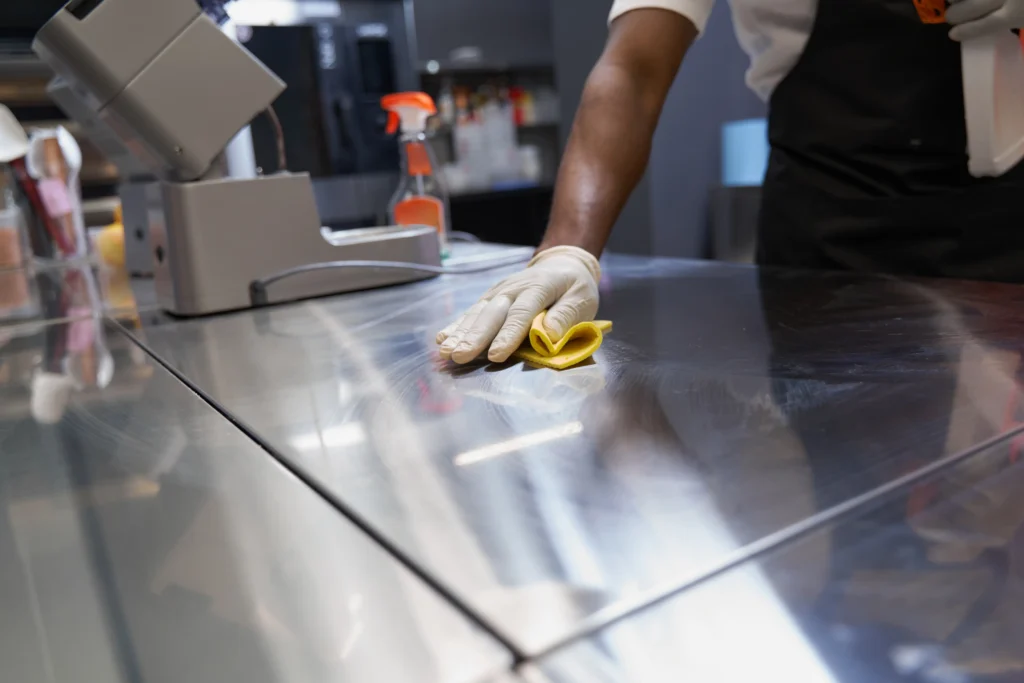
The cost of hiring a commercial kitchen cleaning company varies according to the size of the kitchen, the amount of grease present, the equipment involved, and the scope of work. A small café with limited cooking equipment will generally have different requirements from a large restaurant with multiple cooking stations and an extensive exhaust system.
Before requesting a quotation, consider these factors:
- Kitchen size: Larger areas require more labour and cleaning time.
- Equipment and grease levels: Heavy deposits may require additional treatment and specialised tools.
- Service scope: General kitchen cleaning, hood cleaning, and internal exhaust duct cleaning may be quoted separately.
- Accessibility: Restricted spaces or difficult-to-reach equipment can increase the complexity of the work.
- Cleaning frequency: Regular service arrangements may differ in price from one-off deep cleaning projects.
For a fair comparison, ask each provider to specify the areas covered, the cleaning methods used, any exclusions, and whether post-cleaning inspection or documentation is included. A low quotation may not represent good value if important areas are left out.
A Practical Example: Preparing a Restaurant for a Deep Clean
Consider a restaurant that operates throughout the day and uses several fryers and grills. Its staff clean the worktops and floors after each shift, but grease gradually builds up around the cooking line, on hood filters, and in less accessible areas.
The restaurant manager arranges a professional assessment and discovers that the routine cleaning checklist does not cover every grease-prone area. The cleaning provider then agrees on a scope that covers suitable equipment surfaces, floor edges, accessible filters, and other specified areas.
After the work, the manager updates the cleaning schedule so staff can maintain the kitchen between professional visits. Any specialist exhaust cleaning is planned separately where required.
This is an illustrative example, not a documented GT Environmental customer project. It demonstrates how professional deep cleaning can complement daily housekeeping instead of replacing the work performed by kitchen staff.
Conclusion: Choose a Commercial Kitchen Cleaning Company That Fits Your Needs
Hiring a commercial kitchen cleaning company can help restaurants, hotels, caterers, and other food businesses manage grease accumulation, maintain cleaner working areas, and organise deep cleaning more effectively. The best choice depends on the kitchen’s condition, the equipment involved, the provider’s methods, and the clarity of its service agreement.
For businesses in Singapore, regular housekeeping should be supported by planned deep cleaning and specialist maintenance of kitchen exhaust systems where required. A clear schedule and well-defined cleaning scope make it easier to maintain standards without unnecessarily interrupting kitchen operations.
GT Environmental provides cleaning services for commercial premises, including kitchen cleaning solutions. Visit GT Environmental’s website and enquire about a suitable cleaning arrangement for your business.
Frequently Asked Questions
What should I look for in a commercial kitchen cleaning company?
Look for relevant experience, suitable cleaning methods, trained personnel, clear service inclusions, and appropriate safety procedures. Ask how the provider handles food-contact surfaces, grease deposits, equipment access, and cleaning documentation.
Does commercial kitchen cleaning include exhaust duct cleaning?
Not necessarily. Some services cover general kitchen surfaces and equipment, while internal exhaust duct cleaning is a separate specialist task. Confirm whether the hood, filters, fan, and internal ductwork are included in the quotation.
Can a commercial kitchen cleaning company work after business hours?
Many providers can arrange cleaning outside normal operating hours, subject to availability and site requirements. Scheduling work after service hours can reduce disruption and allow sufficient time for cleaning, rinsing, drying, and preparing the kitchen for its next operation.
How can restaurants maintain cleanliness between professional cleaning visits?
Staff should follow a written cleaning schedule, remove food residue promptly, manage spills, clean appropriate equipment surfaces, and follow the required sanitation procedures. Managers should also monitor grease-prone areas and arrange specialist maintenance when needed.