


A kitchen cleaning service in Singapore helps homeowners and food businesses keep cooking areas clean, hygienic, and easier to maintain. Depending on the property, the service may include degreasing surfaces, cleaning kitchen equipment, removing food residue, and tackling areas that are often missed during routine cleaning. Choosing the right provider means understanding what needs to be cleaned, which methods are suitable, and how the service fits your daily routine.
Choosing a kitchen cleaning service in Singapore depends on the type of kitchen, the level of grease buildup, and how often the space is used. A suitable service should cover the areas that need attention, from cooking surfaces and floors to grease-prone corners that are easy to overlook.
What Does a Kitchen Cleaning Service Include?
A reliable kitchen cleaning service in Singapore should cover the main areas where grease, food residue, and dirt tend to accumulate. Depending on the package, cleaning may include worktops, stovetops, sinks, cabinet exteriors, floors, and other frequently used surfaces.
Common tasks may include:
- Worktops and splashbacks: Removing food stains, oil splashes, and everyday residue.
- Stovetops and cooking areas: Cleaning suitable surfaces around burners, grills, and other cooking equipment.
- Cabinet exteriors: Wiping away fingerprints, dust, and grease that builds up near cooking areas.
- Floors and corners: Removing food particles, dirt, and greasy deposits.
- Sinks and taps: Cleaning watermarks, soap residue, and everyday grime.
- Hard-to-reach areas: Addressing accessible spaces behind or beneath appliances when included in the service.
Not every package covers the same tasks. For example, cleaning the outside of an oven does not necessarily include cleaning its interior, and wiping an exhaust hood does not automatically include degreasing the internal ductwork. Ask for a written list of inclusions before confirming a booking.
Why Is Professional Kitchen Cleaning Important?

A professional kitchen cleaning service in Singapore helps remove stubborn grease, food residue, and dirt that regular wiping may not fully eliminate. This is particularly useful for busy kitchens where cooking oils and food particles accumulate around appliances, worktops, and floors. Regular professional cleaning also helps maintain a more comfortable and hygienic cooking environment.
Professional kitchen cleaning helps remove stubborn deposits that ordinary daily wiping may leave behind. It can also make kitchen maintenance more manageable, particularly in busy households and food businesses where cooking takes place throughout the day.
1. Removing Stubborn Grease
Cooking oil and airborne grease can settle on stovetops, walls, cabinet doors, and extractor hood surfaces. When mixed with dust, these deposits may become sticky and harder to remove.
A professional cleaner can select appropriate degreasers and cleaning tools for the surfaces involved. This matters because harsh chemicals or abrasive pads may damage certain finishes, including coated cabinets and some stainless steel surfaces.
2. Supporting Kitchen Hygiene
Food residue and moisture can create conditions that allow microorganisms to persist on inadequately cleaned surfaces. Regular cleaning, followed by suitable sanitising where required, helps reduce contamination risks around food preparation areas.
For commercial kitchens, cleaning should form part of a broader food safety routine that includes proper food storage, hand hygiene, pest control, and safe food handling. A cleaning service supports these procedures but does not replace them.
3. Improving Kitchen Safety
Greasy floors can increase the risk of slips, while accumulated grease around cooking and extraction equipment can contribute to fire hazards. Removing these deposits helps address avoidable risks, although equipment inspection and maintenance remain necessary.
4. Saving Time During Busy Periods
Deep cleaning can take considerable time when grease has accumulated over weeks or months. Bringing in a cleaning team allows homeowners or kitchen staff to focus on their usual responsibilities while the agreed cleaning tasks are handled separately.
Residential vs. Commercial Kitchen Cleaning
The right kitchen cleaning service in Singapore depends on whether the space is used for everyday home cooking or commercial food preparation. Residential kitchens often need attention to cabinets, countertops, and appliances, while commercial kitchens may require more intensive grease removal and cleaning based on operational needs.
| Factor | Residential kitchen cleaning | Commercial kitchen cleaning |
|---|---|---|
| Typical setting | Houses, condominiums, apartments | Restaurants, cafés, hotels, catering facilities |
| Main concerns | Household grease, spills, cabinet dirt | Heavy grease, food residue, high-volume cooking |
| Equipment | Domestic stoves, ovens, sinks | Commercial fryers, grills, ovens, extraction systems |
| Cleaning frequency | Based on household needs | Often requires daily upkeep and scheduled deep cleaning |
| Work planning | Usually arranged around residents | May need to fit around operating hours |
| Specialist tasks | Appliance or cabinet deep cleaning, if offered | Exhaust hood, filter, and duct cleaning where required |
For a home, a one-time deep clean may be enough to address accumulated grease and neglected corners. A restaurant, on the other hand, generally needs routine cleaning by its staff and a separate plan for periodic deep cleaning and specialist maintenance.
How to Choose a Kitchen Cleaning Service in Singapore
When comparing a kitchen cleaning service in Singapore, look beyond the quoted price. Check the cleaning scope, products used, equipment available, and whether the provider can accommodate your kitchen’s specific requirements. These details help you choose a service that suits your space and cleaning needs.
Check the Cleaning Scope
Before booking, ask for a clear list of tasks included in the package. Some providers focus on visible surfaces, while others offer more detailed degreasing and cleaning of equipment or hard-to-reach areas.
For restaurants, cafés, and catering facilities, a specialised commercial kitchen cleaning service may be more appropriate when the kitchen has heavy grease deposits, commercial cooking equipment, or extraction systems that require specialist attention.
Ask About Cleaning Products and Equipment
The products used should match the surfaces being cleaned. A suitable degreaser may work well on a stainless steel splashback but may not be appropriate for every cabinet finish, painted surface, or appliance component.
Ask the provider whether it uses professional degreasers, non-abrasive brushes, microfiber cloths, and suitable floor-cleaning equipment. For food preparation areas, confirm how surfaces are cleaned and sanitised when required.
Compare Quotes Carefully
A lower price does not always mean better value. Compare what each provider includes, the estimated cleaning time, any additional charges, and whether specialist tasks are excluded.
A reliable kitchen cleaning service in Singapore should be able to explain its scope clearly so customers understand what they are paying for before the work starts.
How Often Should You Arrange Kitchen Deep Cleaning?
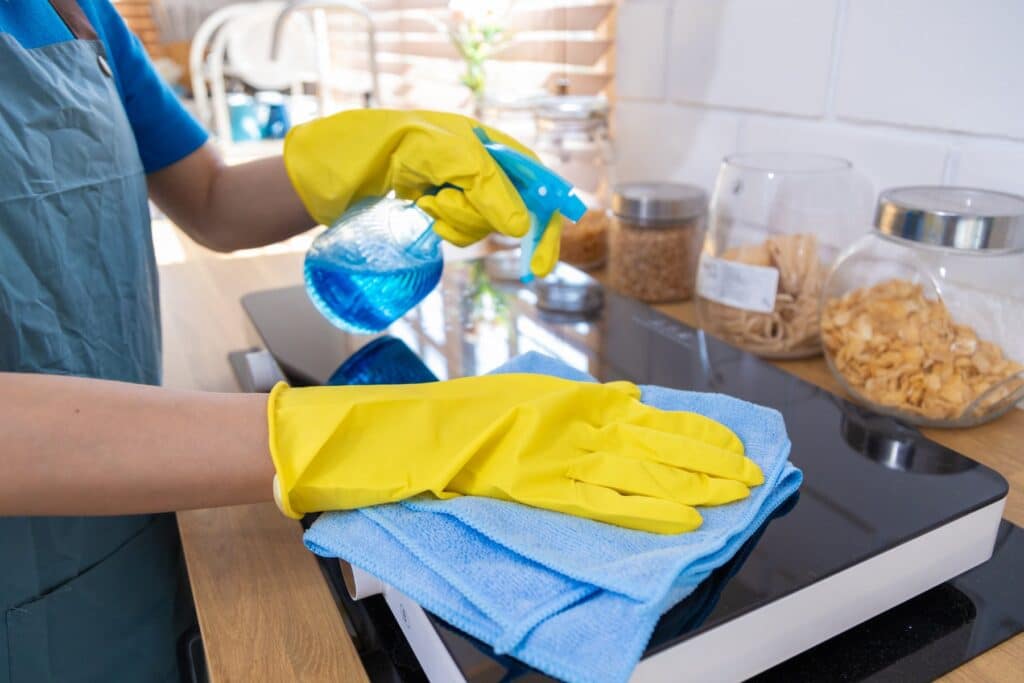
The ideal frequency for a kitchen cleaning service in Singapore depends on cooking habits, kitchen size, and the amount of grease produced. A home kitchen may need occasional professional deep cleaning, while a busy commercial kitchen may require a more structured cleaning schedule alongside daily maintenance.
Consider these factors when setting a schedule:
- Cooking frequency: Kitchens used several times a day tend to accumulate grease and food residue faster.
- Type of cooking: Frying and grilling can produce more airborne grease than cooking methods that generate less oil residue.
- Kitchen size and layout: Larger kitchens and spaces with difficult-to-reach corners may require additional cleaning time.
- Daily maintenance: Consistent wiping and spill removal can reduce the amount of intensive cleaning needed later.
- Equipment requirements: Certain appliances and extraction systems require maintenance according to manufacturer instructions and applicable safety requirements.
A Practical Example: Getting a Restaurant Kitchen Ready for Deep Cleaning
Consider a small restaurant that cleans its cooking surfaces and floors after every shift but still notices sticky grease around the extractor hood and behind cooking equipment. The daily routine keeps the kitchen usable, yet some deposits remain because the team has limited time to reach these areas.
The manager arranges a professional assessment and agrees on a cleaning scope covering accessible grease-prone surfaces, suitable equipment exteriors, and floor edges. Exhaust duct cleaning is assessed separately to determine whether specialist maintenance is required.
After the service, the restaurant updates its cleaning checklist and schedules periodic inspections of areas where grease tends to return. This example is illustrative rather than a documented GT Environmental customer case, but it shows how professional cleaning can complement everyday housekeeping.
How to Prepare Your Kitchen Before a Professional Cleaning Service
Preparing your kitchen before a kitchen cleaning service in Singapore arrives can help the cleaning process run more smoothly. A few simple steps also allow cleaners to focus on grease removal, stubborn stains, and areas that need deeper attention.
Before the appointment, consider these preparations:
- Clear the countertops: Remove food, utensils, and small appliances so cleaners can reach the surfaces easily.
- Store food safely: Put away exposed ingredients and perishable items before cleaning begins.
- Identify problem areas: Point out grease buildup, stains, or corners that need extra attention.
- Secure valuable items: Keep personal belongings and fragile kitchenware in a safe place.
- Confirm the service scope: Check which appliances, cabinets, and surfaces are included in your chosen cleaning package.
For businesses, it is also helpful to arrange cleaning at a suitable time to minimise disruption to kitchen operations. A professional kitchen cleaning service in Singapore should be informed about access requirements, equipment that needs special care, and any areas that require specific cleaning procedures.
With these preparations completed, cleaners can work more efficiently and focus on the areas that need the most attention.
Conclusion: Keep Your Kitchen Clean with the Right Professional Service
Choosing the right kitchen cleaning service in Singapore can make kitchen maintenance easier and help keep the space cleaner and more manageable. Before booking, compare the service scope, cleaning methods, and experience relevant to your type of kitchen.
For commercial kitchens, professional deep cleaning should complement daily housekeeping and specialist equipment maintenance rather than replace them. A clear schedule helps businesses maintain consistent cleaning standards while keeping disruption to a minimum.
GT Environmental provides cleaning solutions for commercial premises, including commercial kitchen cleaning. Visit GT Environmental to explore its services and enquire about a cleaning plan suited to your property’s needs.
Frequently Asked Questions
How much does a kitchen cleaning service in Singapore cost?
The price depends on the kitchen’s size, its condition, the amount of grease, the equipment involved, and the cleaning tasks requested. A basic residential kitchen clean will have different requirements from a commercial kitchen deep clean. Request an itemised quotation to compare providers fairly.
What is the difference between regular cleaning and kitchen deep cleaning?
Regular cleaning handles everyday spills, food residue, and visible dirt. Deep cleaning focuses on accumulated grease, neglected corners, and other areas that need more intensive attention. The exact scope varies by provider.
What should I look for in a kitchen cleaning service in Singapore?
Look for a clear service scope, suitable cleaning methods, transparent pricing, and experience with your type of kitchen. For commercial premises, check whether the provider can address grease buildup and other cleaning requirements relevant to your operation.
Does professional kitchen cleaning include sanitising?
Not automatically. Cleaning removes dirt and residue, while sanitising uses an appropriate process to reduce microorganisms on suitable surfaces. Ask which tasks are included and ensure food-contact surfaces are treated according to relevant product instructions and food safety procedures.
How do I prepare my kitchen before the cleaners arrive?
Remove personal belongings and unnecessary items from the work area, store food safely, and let the provider know about delicate surfaces or equipment that requires special handling. For commercial kitchens, coordinate access with staff and clarify whether appliances need to be switched off or cooled before cleaning.